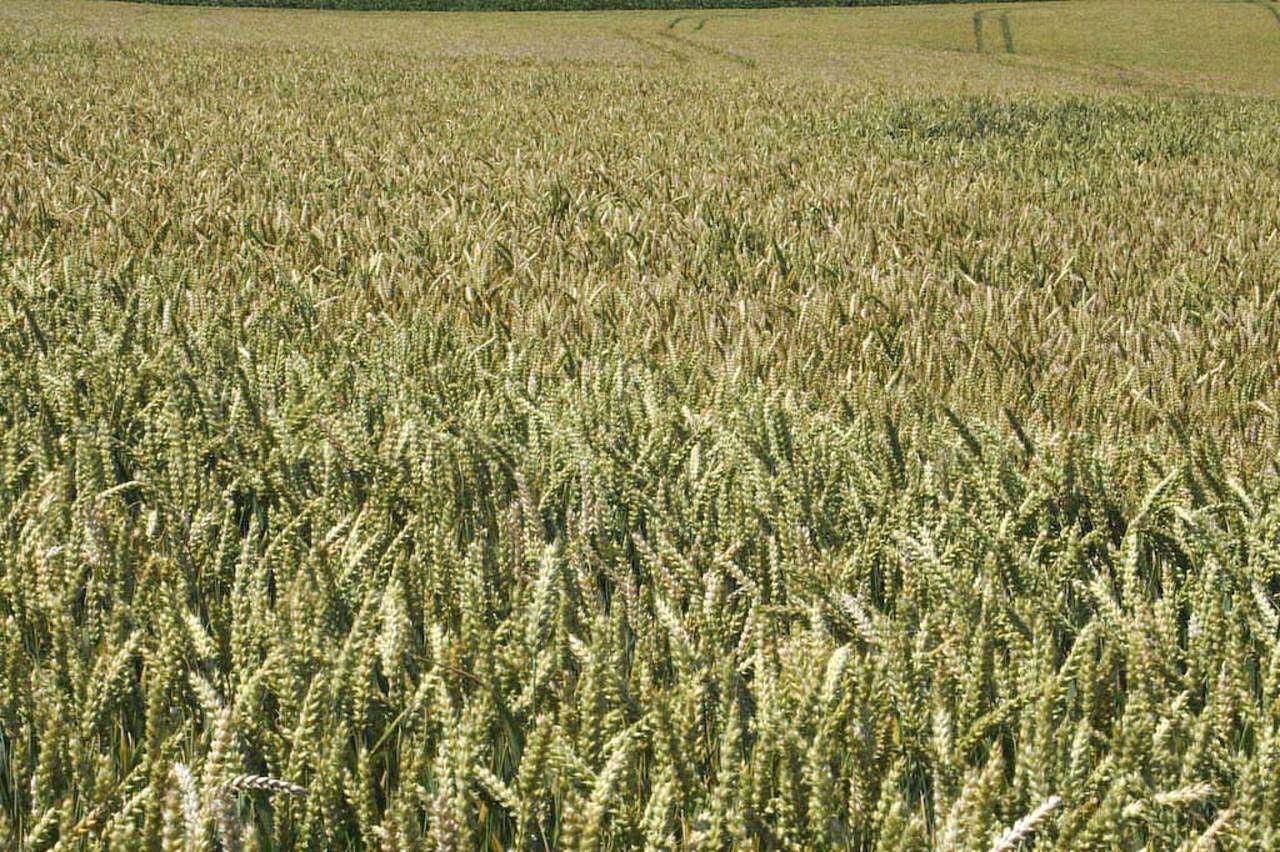
Barley (Hordeum vulgare) has been grown on the Canadian Prairies since early agricultural settlement and remains one of the region's most widely seeded field crops. Alberta accounts for the largest share of national production, with Saskatchewan contributing substantially. The crop occupies a dual role in prairie agriculture: it supplies malting grain to breweries and distilleries that pay quality premiums, and it provides a high-energy feed grain for the large livestock sector, particularly Alberta's commercial feedlot industry.
Barley's adaptability to cooler growing conditions, earlier maturity relative to spring wheat, and broad utility across food, feed, and industrial applications have maintained its importance across the Prairie provinces even as canola has expanded to claim a larger share of total seeded area.
Malt Barley and Feed Barley: Key Distinctions
The distinction between malt-grade and feed-grade barley is primarily agronomic and economic. Malt barley must meet quality specifications set by malting companies — standards related to germination energy, plump kernel percentage, protein content, beta-glucan level, and freedom from disease damage. Feed barley has no such specifications and is priced as a commodity based on test weight and moisture content.
Two-row barley varieties dominate the malt market. Varieties such as CDC Bow, Copeland, and AAC Synergy have been developed and maintained through collaborative breeding programs at the Crop Development Centre (University of Saskatchewan) and Agriculture and Agri-Food Canada. These varieties are characterized by high extract yield — the percentage of soluble material extracted during the brewing mash — and germination energy sufficient to meet commercial malt processing requirements.
Six-row barley varieties, once common in eastern Canada and the United States, are less prevalent in western Canadian production but are grown in some contexts. Two-row types dominate both the malt and feed markets in Alberta and Saskatchewan because of their adaptability to Prairie conditions and consistent agronomic performance.
Seeding Window and Establishment
Barley is typically the earliest-seeded spring cereal in the Prairie rotation, with seeding beginning as early as mid-April in southern Alberta and Saskatchewan when soil conditions allow. Its tolerance of cool soil temperatures at germination and relatively strong frost tolerance at early growth stages make earlier seeding viable compared with more sensitive crops.
Early seeding is agronomically advantageous. Crops seeded in mid-April in southern regions complete grain fill under cooler temperatures and before the probability of late-summer heat events increases. Later seeding compresses the grain-fill period and can increase the risk of heat-induced quality issues, particularly for malt barley where even slight kernel damage affects malting performance.
Recommended seeding depth is 2.5 to 4 cm, depending on soil moisture. Seed-to-moisture contact is essential for uniform germination. Seeding rate is calibrated to achieve plant stands that balance yield potential with lodging risk — barley has a strong tillering capacity and can compensate to some extent for low plant densities through additional tillers bearing grain, but very high plant populations combined with high nitrogen inputs increase the risk of stem lodging.
Certified seed treated with a fungicide seed treatment provides protection against soilborne pathogens that cause seedling blight and common smuts. Loose smut (Ustilago nuda), which infects developing grain heads rather than germinating seedlings, requires systemic fungicide seed treatments for effective control.
Nutrient Management and Lodging Risk
Nitrogen is the primary yield-determining input in Prairie barley production. However, the relationship between nitrogen rate and grain quality is particularly important for malt barley growers. Protein content that exceeds roughly 13.5% on a 12% moisture basis can lead to rejection of malt deliveries, as high-protein barley tends to produce darker-coloured beer and can affect brewing efficiency.
As a result, nitrogen application rates for malt barley are often deliberately set lower than what might be applied for maximum yield, balancing yield and protein targets to stay within the malting company's acceptance range. Soil test results, yield history, and local extension guidance help calibrate appropriate nitrogen rates for specific fields and management goals.
Excessive nitrogen combined with dense plant populations and susceptible varieties creates ideal conditions for stem lodging — the flattening of the crop canopy by wind and rain. Lodged barley is difficult to harvest cleanly, reduces combine efficiency, and can result in significant yield and quality losses. Shorter-strawed varieties with improved stem strength have been developed partly in response to this challenge.
Sulphur supplementation has shown consistent yield responses in many Prairie barley fields, particularly on sandy-textured soils with low organic matter content. Phosphorus applied at seeding supports early root development and is important in soils testing below sufficiency thresholds.
Fusarium Head Blight and Foliar Diseases
Fusarium head blight (FHB) poses comparable risks in barley production as in wheat. Infection by Fusarium graminearum during heading results in blighted kernels and the accumulation of the mycotoxin deoxynivalenol (DON). The Canadian Grain Commission and malting industry set maximum DON limits for malt-grade barley, and loads exceeding these limits face rejection or grade penalties.
Management of FHB in barley includes the use of variety resistance ratings, fungicide applications during early heading (using registered products such as tebuconazole or metconazole formulations applied at flag leaf to early heading), and crop rotation to reduce inoculum levels in fields with history of disease pressure.
Net blotch, caused by Pyrenophora teres, is the most common foliar disease of barley on the Prairies and can cause significant yield losses in susceptible varieties under warm, moist conditions. Two forms — net-type net blotch and spot-type net blotch — both reduce photosynthetic area and can contaminate grain lots. Variety resistance is the primary management tool; foliar fungicides are applied in higher-value malt barley crops when disease levels reach economic thresholds.
Spot blotch (Bipolaris sorokiniana) and powdery mildew (Blumeria graminis f.sp. hordei) also occur in Prairie barley production, with powdery mildew more prevalent in moister regions and under conditions of dense crop canopies.
Harvest and Storage for Malt Quality
Harvest management is particularly critical for malt barley, where physical and biochemical grain quality must be preserved from the field through delivery and storage. Straight-cut harvesting is common and reduces one operation compared with swathed harvest, but cylinder and concave settings must be adjusted to minimize kernel cracking — damaged kernels have reduced germination energy and are subject to downgrade or rejection.
Target grain moisture for malt delivery is typically 13 to 13.5%. Grain harvested above this range requires drying before delivery or storage. Aerated on-farm storage allows producers to hold barley at harvest moisture for gradual drying with ambient or slightly heated air, reducing the risk of quality deterioration during warm post-harvest conditions.
Test weight and plump kernel percentage are assessed by buyers as indicators of malt quality potential. Light or shrunken kernels, which may result from heat stress during grain fill or disease damage, can reduce malting extract yield and are subject to dockage at delivery.
Market Pathways for Prairie Barley
Barley is marketed through several channels on the Canadian Prairies. Feed barley trades as a commodity grain, with prices influenced by feed grain demand, particularly from Alberta's cattle feeding sector, and the relationship between barley and corn prices as competing feed energy sources. Country elevator deliveries for feed barley occur throughout the year as producer and buyer schedules align.
Malt barley marketing follows a different structure. Malting companies and brokers typically offer forward contracts before or during the growing season that specify varieties, quality standards, delivery periods, and pricing. Producers who grow on contract have price certainty before harvest but must deliver grain meeting all specified quality parameters. Off-contract malt barley that meets quality specifications can sometimes be sold spot to malting buyers, though pricing and availability depend on the season's overall production and quality.
Export of barley — both malt and feed — contributes to price support in years of large domestic production. China, Japan, Saudi Arabia, and other international buyers have historically been significant destinations for Canadian barley, though export volumes fluctuate with domestic feed demand and international market competition.
References: Canadian Grain Commission — barley grades and quality standards. Agriculture and Agri-Food Canada — variety performance trial results and crop statistics.